
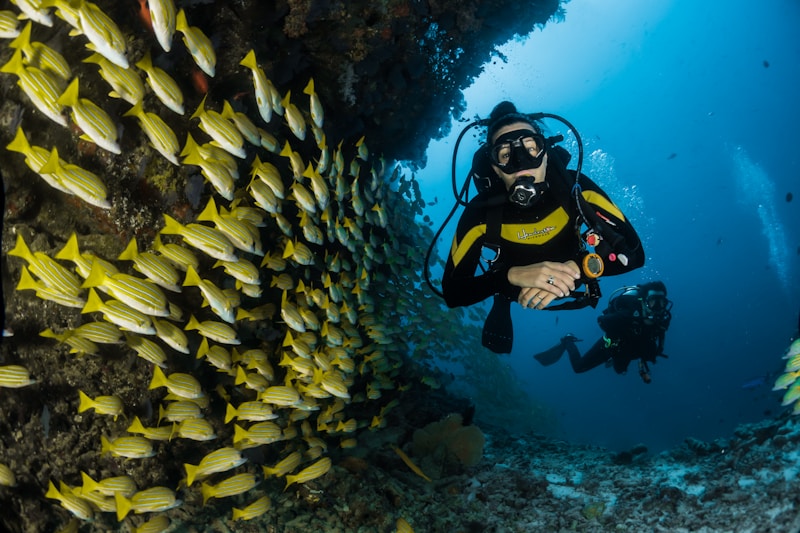
Ari Atoll is the Maldives' diving heartland — a long oval reef system stretching nearly 80 kilometres from north to south, ringed with thila pinnacles, manta cleaning stations and one of the only places on earth with a year-round whale shark population. Here is what to expect, where to stay and how to plan an Ari trip in 2026.
Why Ari Atoll is Different
Ari is the second-largest atoll system in the Maldives by area and is administratively split into Alif Alif (AA, North Ari) and Alif Dhaalu (ADh, South Ari). The atoll's geography — wide outer walls, dozens of submerged thilas inside the lagoon, and a southern boundary that meets the Hafza Kandu — creates an unusual concentration of cleaning stations and feeding aggregations. South Ari Marine Protected Area, gazetted in 2009, covers 42 kilometres of the outer reef where whale sharks (Rhincodon typus) feed throughout the year.
The atoll is reachable from Velana International Airport in 25–30 minutes by seaplane, or by domestic flight to Maamigili Airport (DDD) on the southeastern rim followed by a short speedboat. Maamigili gives Ari one of the few non-seaplane outer-atoll access options in the country, useful for late evening arrivals.
Whale Sharks at South Ari
The South Ari MPA is one of two locations on earth where whale sharks are encountered all year round (the other being La Paz, Mexico). Aggregations are concentrated along the outer atoll wall between Maamigili and Dhigurah islands. The Maldives Whale Shark Research Programme, which has identified more than 400 individual sharks since 2006, manages a strict code of conduct: snorkelers only, no scuba bubbles, three-metre minimum distance, no flash photography.
When to See Them
Although whale sharks are present year-round, sightings peak May–November on the western side during the southwest monsoon and December–April on the eastern side as currents shift. Resorts on Rangali, Mirihi and the southern Ari islands run dedicated whale shark excursions; guesthouses on Dhigurah village offer the same experience at a fraction of the cost.
Manta Rays and Thila Diving in North Ari
North Ari is famous for its manta cleaning stations, particularly Madivaru, Donkalo Thila and Hukurudhoo Faru. The 2025–2026 season has continued a multi-year trend of strong manta activity at these stations, with the Manta Trust recording aggregations of 15–30 individuals at peak. North Ari also delivers some of the country's best thila pinnacle dives — submerged seamounts that rise from 30 metres to within 5 metres of the surface, draped in soft coral and patrolled by grey reef sharks, eagle rays and big trevally.
Resorts in Ari Atoll
Ari has one of the deepest resort line-ups in the country, from family-friendly mid-range islands to ultra-luxury private retreats. The table below summarises representative options across price tiers.
| Resort | Sub-atoll | Style | Best For |
|---|---|---|---|
| Conrad Maldives Rangali | South Ari | Ultra-luxury | Whale sharks, undersea restaurant |
| Mirihi Island Resort | South Ari | Boutique luxury | House reef, no kids policy |
| LUX* South Ari | South Ari | Luxury family | Whale shark excursions, kids club |
| Constance Halaveli | North Ari | Luxury | Manta diving, romance |
| Vilamendhoo Island Resort | South Ari | Mid-range | Snorkelling, value |
| Sun Island Resort | South Ari | Large family | Multi-generational groups |
| Dhigurah Guesthouses | South Ari | Local island | Budget whale shark trips |
Best Time to Visit Ari
Ari Atoll experiences the same two-monsoon pattern as the rest of the Maldives — northeast (Iruvai, December–April, drier) and southwest (Hulhangu, May–November, wetter and stormier). For guaranteed sunshine and calm seas, plan for January through March. For the best whale shark visibility on the western reef, June through October has historically been strongest. Manta aggregations at North Ari peak with the southwest monsoon plankton blooms.
Booking Ari Atoll
Browse curated Ari Atoll resorts at aMaldives Resorts. Check live rates and packages on Booking.com Maldives. For whale shark and manta excursions, day trips and dive packages, see GetYourGuide Maldives.
Practical Tips for Ari Travellers
If you are diving, certify in advance — Ari's currents on the outer wall and at thilas demand at least Open Water level and ideally 30+ logged dives for the channel sites. If you are snorkelling, aim for resorts with a strong house reef (Mirihi, Vilamendhoo, Lily Beach) so you can swim from the beach rather than paying for boat trips daily. Whale shark excursions on the resort side typically run $120–180 per person; from Dhigurah village they start at $35–50.
Frequently Asked Questions
Is Ari Atoll better than Baa Atoll for diving?
They serve different priorities. Baa is a UNESCO Biosphere Reserve famous for the seasonal manta aggregation at Hanifaru Bay (June–November). Ari is larger, has a year-round whale shark population, more thila dives and broader manta cleaning station coverage. Serious divers often visit both.
Can I snorkel with whale sharks without diving certification?
Yes. The South Ari Marine Protected Area is a snorkel-only zone for whale shark interactions — scuba is not permitted. Excursions are run with surface viewing only, which suits non-divers.
How do I get to Ari Atoll from Malé?
Three options: 25–30 minute seaplane to most resorts, domestic flight to Maamigili Airport (DDD) followed by short speedboat for southern Ari, or speedboat directly from Malé (approximately 90 minutes) for the eastern islands closest to North Malé.
Are there budget options in Ari?
Yes. Dhigurah and Mathiveri are local islands with guesthouses offering whale shark and manta trips at a fraction of resort prices. Mid-range resorts like Vilamendhoo and Centara Ras Fushi also serve the value end of the market.
What is the average water temperature in Ari?
Ari sits between 27°C and 30°C year-round, with February through April typically being the warmest. A 3mm shorty is sufficient for most divers; many snorkel without a wetsuit at all.